
Events
We are based in El Paso, TX. All event times are listed in Mountain Time (2 hours behind EST).
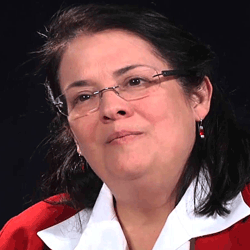
Dr. Nancy Pineda madrid: “Teología en la frontera: fE, Feminicidio y el llamado a la justicia”
La violencia destruye vidas. Uno de los peligros que la violencia presenta para las supervivientes es su capacidad que tiene para destruir su conciencia de las mujeres como imago Dei -imagen de Dios- al inhibir su imaginación y truncar su apertura a la dimensión místico-política de ser seres humanos. Esta presentación aborda la escalada de violencia contra las mujeres de color, específicamente el feminicidio, como una realidad trágica e insostenible en nuestro tiempo. Esta presentación argumenta que aunque la violencia inflige heridas graves, la resistencia a la violencia en forma de reinterpretaciones públicas de símbolos y narrativas cristianas puede fomentar el desarrollo de una dimensión místico-política de la vida.
Nancy Pineda-Madrid, Ph.D., es expresidenta de la Sociedad Teológica Católica de América (CTSA) y titular de la Cátedra T. Marie Chilton de Teología Católica en la Universidad Loyola Marymount, donde imparte clases desde 2019. Es una reconocida autora internacional de varios libros, artículos y publicaciones de capítulos en inglés, español, alemán, portugués y francés. Su trabajo académico fue reconocido en 2024 cuando recibió el premio Hearts on Fire Writer's del Loyola Institute for Spirituality, y en 2025 con el premio Elizondo de la Academia de Teólogos Católicos Hispanos de los Estados Unidos (ACHTUS). Nancy nació en Albuquerque, Nuevo México, y creció en El Paso, Texas, donde su familia aún vive.
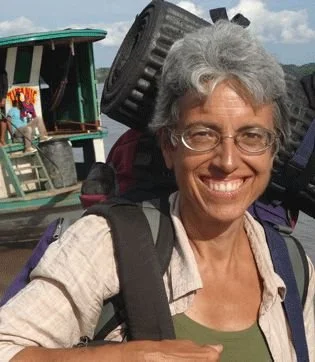
Barbara FRASER:“Why does the Amazon Rainforest Matter?”
This presentation provides an overview of the threats facing the Amazon, actions that Indigenous and other Amazonian communities are taking to defend this fragile and spectacular part of creation, and how their struggle is part of a global web of actions in which Maryknollers around the world are also involved. Providing 20% of the planet’s freshwater, the Amazon is home to a wide array of both biological and cultural diversity. Yet most of its human residents lack access to safe drinking water, and the basin’s hydrological cycle, which plays a crucial role in regulating the global climate, is threatened by human activities that cause deforestation and ecosystem degradation, exacerbated by climate change. Amid the uncertainty, the greatest hope can be found at the grassroots, where Indigenous people, especially women, stand up courageously to defend their territories, and communities, often involving church people, organize to protect the ecosystems on which all Amazonian life depends.
A freelance journalist with more than 30 years of experience in Latin America, Barbara Fraser has reported from across the hemisphere—from migrant routes in southern Mexico to Indigenous communities confronting oil contamination in the Amazon. Based in Peru since 1989, she specializes in environmental, public health, and Indigenous issues. Her work has appeared in Nature, Science, The Lancet, National Geographic, Mongabay, EcoAméricas, Discover, and Catholic media outlets. She holds a B.A. in Communication Arts/Journalism from the University of Dayton and a master’s in environmental studies from Green Mountain College.
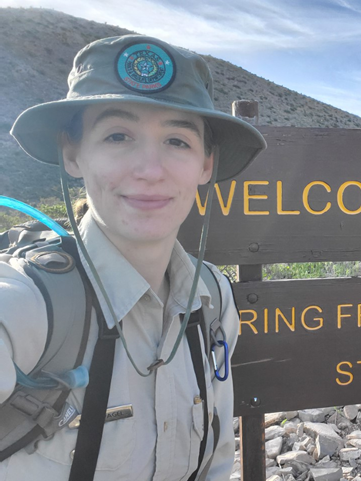
LYDIA PAGEL: “Desert Keepers: Restoring balance in a changing climate”
When it comes to environmental conservation, maintaining a healthy ecosystem balance is key. Deciding what balance means is more tricky especially in desert ecosystems which are often neglected or lumped in with “problem” areas. Let’s dive into the different ways people think about how we ought to approach caring for our world, how we can work with instead of against natural processes, and answering the question “what does a healthy desert look like?”
Ranger Lydia is an El Paso native who fell in love with nature on camping trips as a young girl. To learn more about these places she loved, she got her bachelor’s degree in Biology from Hope College and latter began working for Texas Parks and Wildlife as an Interpretive Park Ranger. As a Park Ranger, she gets to share the amazing, hidden, beauty of the Chihuahuan Desert with locals and visitors alike and to watch people discover, or re-discover, the joy of the outdoors.
LauriE marshal: “Creative Expression: An intersection of Peace building and Environment for young people and adults”
Creative Expression: An Intersection of Peacebuilding and Environment for Young People and Adults This interactive, creative workshop will share a global project where the whole world is invited to make a painting together, called the Singing Tree Mural Project. This collaborative art process is a peace building program rooted in the wisdom of native trees and forests and harnessing everyone's innate creativity. Inspired by an 8-year-old girl in 1999, 151 murals have been created by over 27,000 from 64 countries, each one envisioning healing to community heartbreak and solutions to community challenges. Unity Through Creativity is currently training facilitators in this innovative team building process.
For 35 years, author, innovator and artist Laurie Marshall has empowered youth and adults through creative collaboration. She practices Peace Building through Art, inspired by Nature. A visionary educator, she has served mostly low-income children, families and their schools as an Arts Integration and Project Based Learning specialist. Her mission is to nurture creativity, a love of learning and a collaborative spirit. She is the founder of Unity Through Creativity Foundation and the Singing Tree Project.
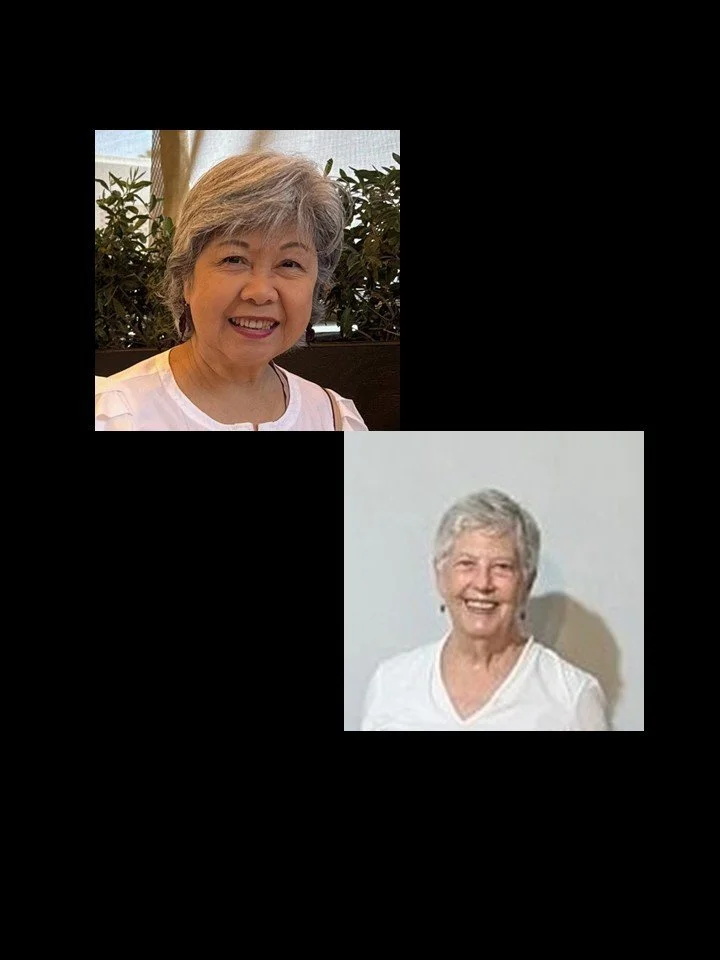
Maria Corazon ANGELES, ESQ and Ann coady: “The many ways we accompany: Faithful responses to migration”
In this presentation, Maria Corazon and Ann Coady will talk about the current immigration situation and how through their various roles, they accompany families journeying through the immigration system.
Maria Corazon, originally from the Philippines, and now rooted in El Paso, Texas as a Maryknoll Lay Missioner. A graduate of Maryknoll College (now Miriam College) in Quezon City, and of the University of the Philippines, College of Law, she has spent four decades in solo legal practice in Los Angeles, CA specializing in immigration law. In those years, she has walked closely with families facing uncertainty, fear, and hardship- experiences that have deepened her commitment to justice, mercy, and the resilience of the human spirit. She joined Maryknoll Lay Missioner as Class of 2025, and brings to mission a lifetime of compassion, legal advocacy, and a heart shaped by her own migrant journey. Ann Coady is a Maryknoll Lay affiliate in the USA. She is fluent in Spanish serving in the Peace Corps in Colombia, South America; worked as Community Liaison and Parent Educator for the Port Washington NY school district serving mostly immigrant families and volunteered as a national disaster responder for the American Red Cross, serving Spanish-speaking victims of disasters. She has had other roles related to the judicial system such as volunteer guardian ad litem in Juvenile Court, working with immigrant families involved in the child protection system, volunteer intake worker and Spanish interpreter for the Free Clinic of Pierce and Saint Croix Counties, Wisconsin and volunteer tutor in public elementary school in Hudson, WI.
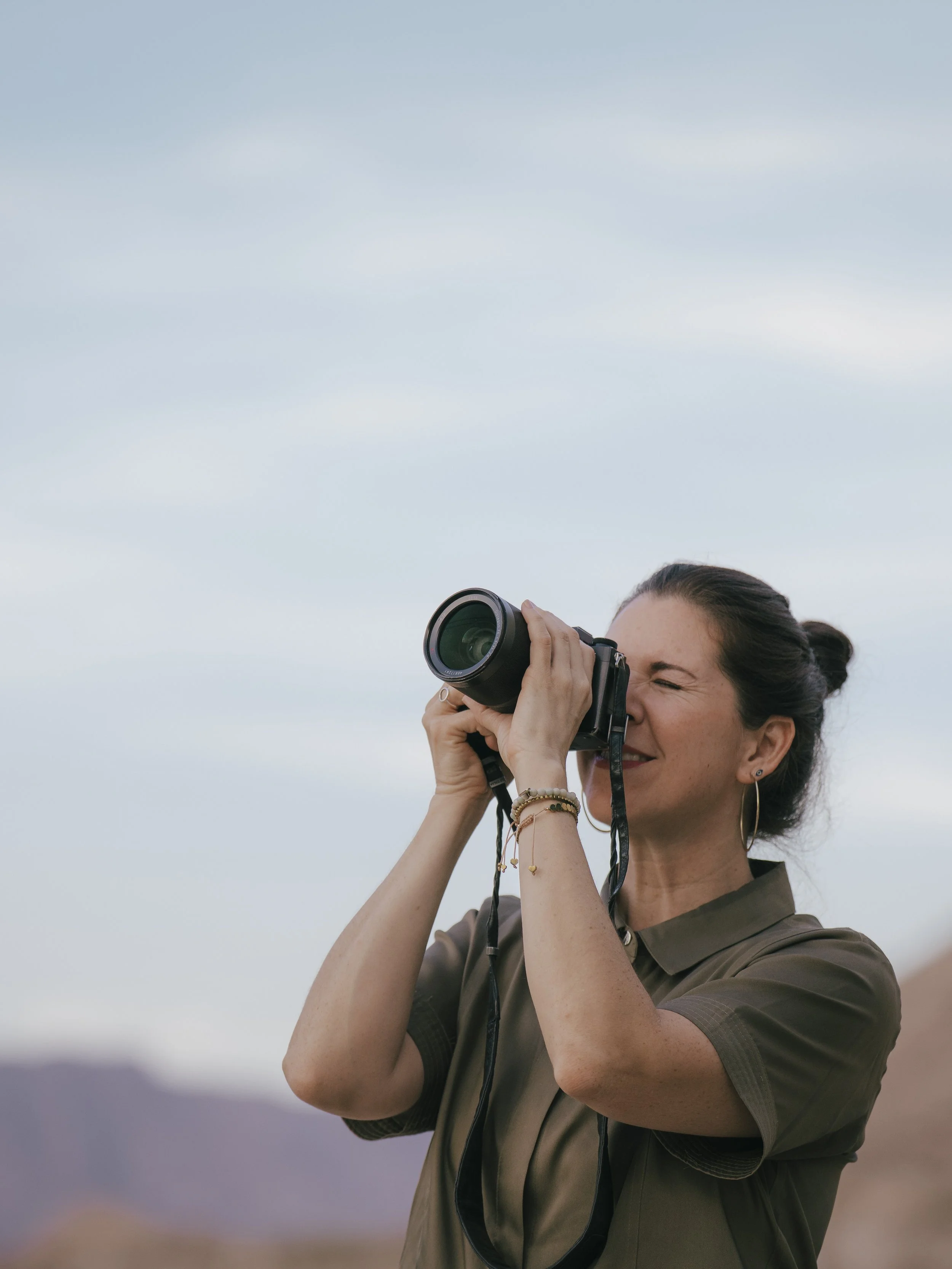
Mónica Lozano: “Arte, testimonio y memoria: Usando la expresión creativa para honrar los caminos migrantes”
THIS WEBINAR WILL BE IN SPANISH
Mónica Lozano is a Mexican-American photographer born in El Paso, Texas, and raised in the sister city of Ciudad Juárez. With over two decades of photographic documentation, her work delves deeply into the migrant experience across global borders. Known for her elegant, socially charged portraits, Lozano captures the gravity of conditions that lead to mass migration—from the perilous journey of crossing borders to the survival tactics required in foreign lands. Her images document human migratory history, reaffirming the universal values and rights every individual deserves. In 2008, Monica earned her Master’s Degree in Fine Art Photography from Madrid, Spain, where she created her first photographic series, Borders. Since then, her work has been exhibited in 21 countries and recognized with numerous international awards and grants. Her photographs have been featured in publications and books such as Portrait of Humanity by the British Journal of Photography and Magnum Photos, Two Sides of the Border by architect Tatiana Bilbao at Yale University, Witness by World Press Photo, and The New York Times, to name a few. In 2011, Mónica Lozano completed the Photo Global residency at the School of Visual Arts in New York City, where she was awarded the Presidential Scholarship. Today, Lozano is based in El Paso, Texas, her latest collaborative project, What Remains, merges art, research, and education to explore the intimate journey of migration. What Remains is now part of the Renee Crown Institute of Wellness and the University of Colorado’s multimodal research initiatives. These efforts use photography as a medium to empower youth from vulnerable groups to share their migration stories, fostering a better understanding of the invisible borders of trust and belonging in their new environments.
ESTA PRESENTACION SERA OFRECIDA EN ESPAÑOL
Mónica Lozano es una fotógrafa mexicoamericana nacida en El Paso, Texas, y criada en la ciudad hermana de Ciudad Juárez. Con más de dos décadas de documentación fotográfica, su trabajo profundiza en la experiencia migratoria a través de fronteras globales. Conocida por sus elegantes retratos cargados de personalidad, Lozano capta la gravedad de las condiciones que conducen a la migración masiva: desde el peligroso viaje de cruzar fronteras hasta las tácticas de supervivencia necesarias en tierras extranjeras. Sus imágenes documentan la historia migratoria humana, reafirmando los valores y derechos universales que cada individuo merece. En 2008, Mónica obtuvo su maestria en fotofrafia de bellas artes en Madrid, España donde creó su primera serie fotográfica, Borders. Desde entonces, su obra se ha expuesto en 21 países y ha sido reconocida con numerosos premios y subvenciones internacionales. Sus fotografías han sido publicadas en libros como Portrait of Humanity del British Journal of Photography y Magnum Photos, Two Sides of the Border de la arquitecta Tatiana Bilbao en la Universidad de Yale, Witness de World Press Photo y The New York Times, por nombrar algunos. En 2011, Mónica Lozano completó la residencia Photo Global en la escuela de artes visuales de Nueva York, donde recibió la Beca Presidencial. Hoy en día, Lozano reside en El Paso, Texas; su último proyecto colaborativo, What Remains, fusiona arte, investigación y educación para explorar el íntimo viaje de la migración. What Remains forma ahora parte de las iniciativas de la investigación multimodal del Renee Crown Institute of Wellness y de la Universidad de Colorado. Estos esfuerzos utilizan la fotografía como medio para empoderar a jóvenes de grupos vulnerables a compartir sus historias migratorias, fomentando una mejor comprensión de las fronteras invisibles de confianza y pertenencia en su nuevo entorno.
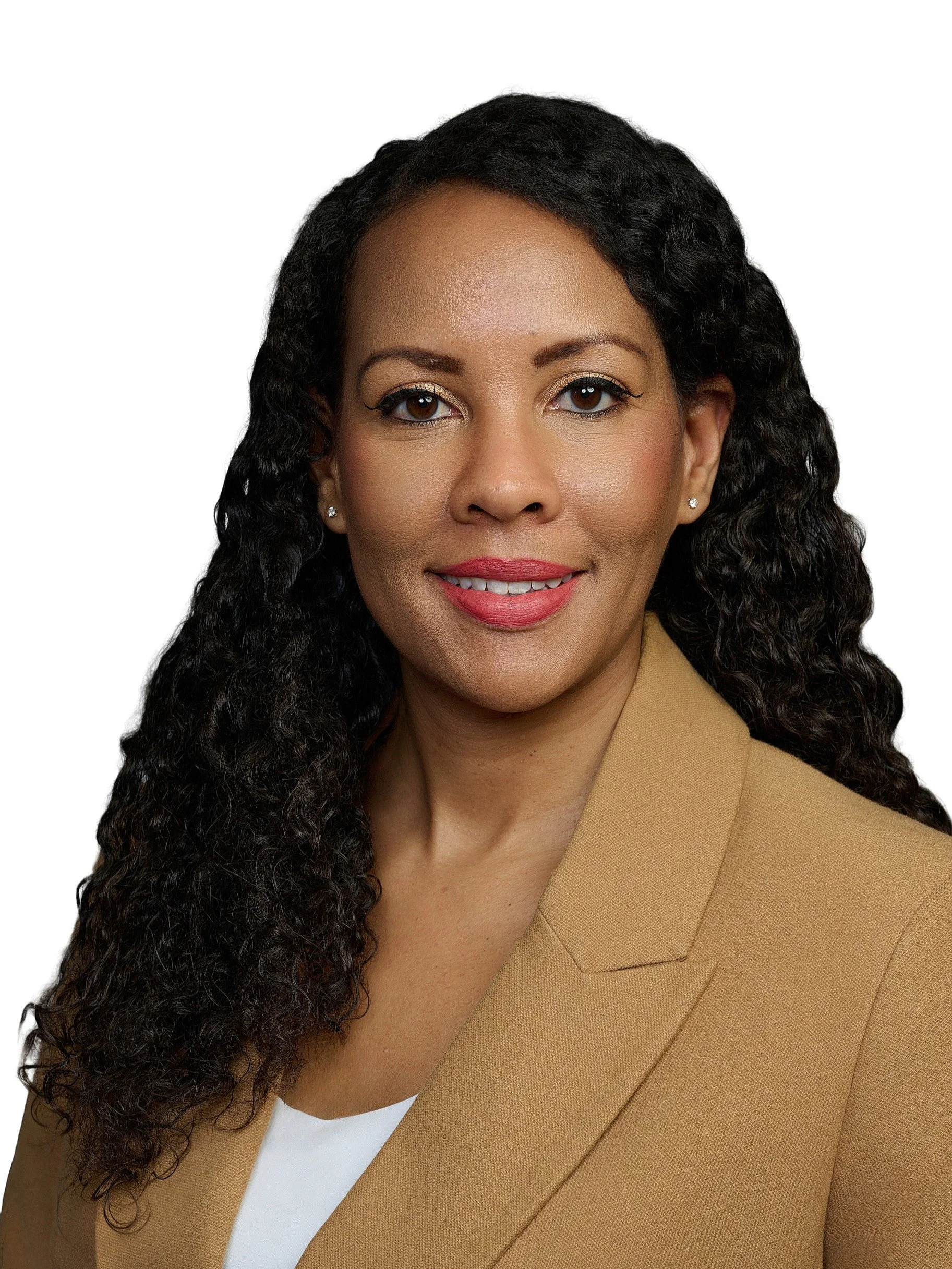
ALESSANDRA HARRIS: “The Enduring Call for Racial Justice”
Alessandra Harris is a writer, author, wife, and mother of four. She earned degrees in comparative religious studies, Middle East studies, and a graduate certificate in restorative justice and chaplaincy. She has published three novels and her fourth book, In the Shadow of Freedom: The Enduring Call for Racial Justice, is her first non-fiction title, which won first place for Religion in the Public Square in the Catholic Media Association Awards 2025. In addition to co-founding Black Catholic Messenger, her writing has appeared in National Catholic Reporter, America Magazine, US Catholic, The Revealer, Critical Theology, and The Catholic Worker. She currently volunteers as a chaplain at the women’s jail in Santa Clara County, California.
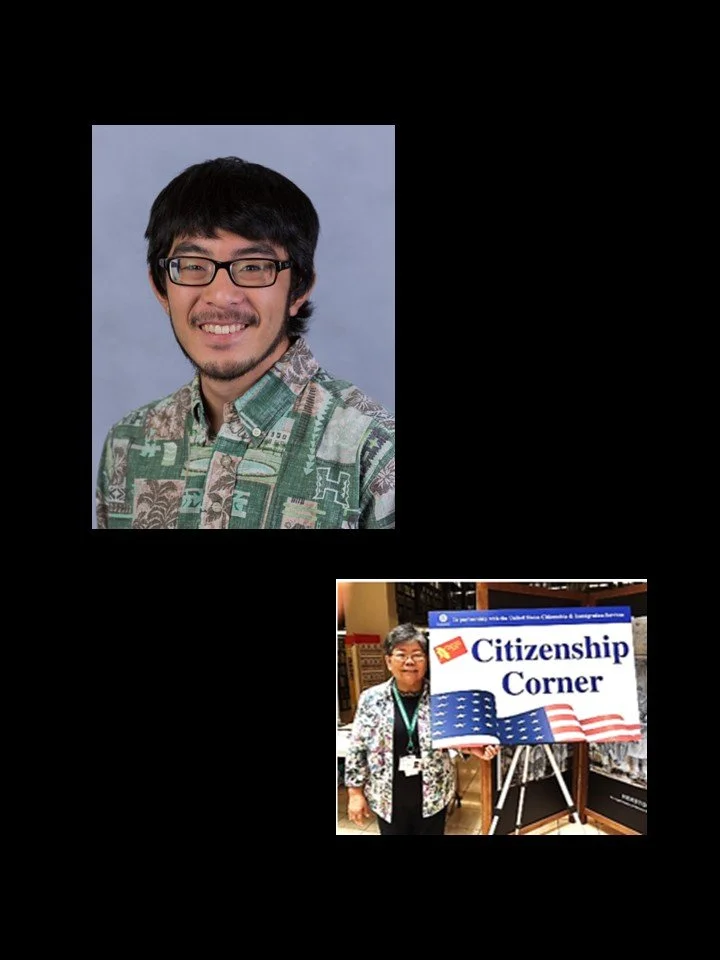
Sr. Aurora de la Cruz, MM & Ethan higa, ESQ: “The Sacred Journey: Migration, Exile and the Promise of Belonging”
As co-presenters, Sister Aurora and Ethan Higa, esq, will discuss their topic within the context of Hawaii. They will present a summary of their work as staff with an immigration legal service provider, with a brief background on the context of Hawaii as a state and how immigration has played a role in its existing make-up. Their talk will highlight the types of clients that they serve and the reasons they migrated. They will also address systems in place that determine immigration to the state. They will offer insights into their personal philosophy of why they do the work and why they believe it is important for integration, welcoming and providing people with the same chance they have had. Furthermore, they will also discuss their challenges in empowering a client to have a sense of belonging.
Catholic Charities of Hawaii supports a philosophy of belonging through legal support, case management, empowerment services and others. The session will close by identifying the takeaways or action steps that participants can take to support immigrants in integrating/starting their lives in a foreign place.
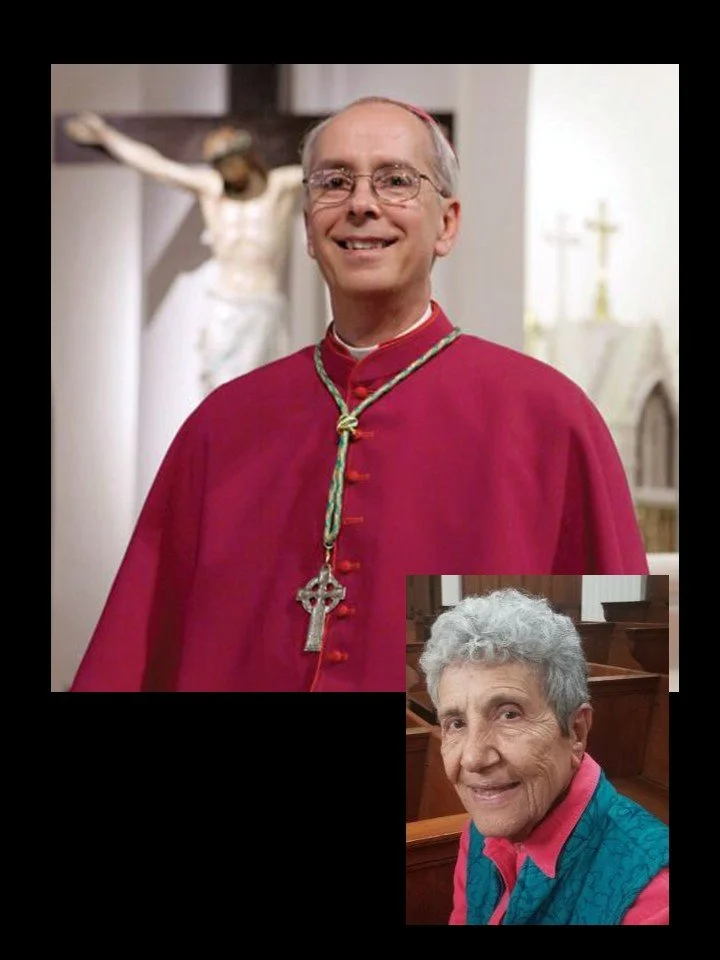
Bishop Mark Seitz, DD: “Faith and Activism in Human Migration” Guest speaker Sr. Rosemarie Milazzo, MM
Bishop Mark J. Seitz presents “Faith and Activism in Human Migration,” a pastoral and prophetic reflection on migration at the US-Mexico border. Drawing on firsthand experience and advocacy, Bishop Seitz will explore Catholic social teaching’s call for faith communities to respond with solidarity and justice. This session offers spiritually grounded insight and practical inspiration for faith-based advocacy, directly supporting the Maryknoll Monarch Initiative’s mission by equipping communities for informed activism and transformative solidarity.
Maryknoll Sister Rosemarie Milazzo is known for her lifelong commitment to peace and her compassionate service to migrants and refugees. She has worked with Christian Peacemaker Teams in conflict zones such as Canada, Congo and Iraq Kurdistan, offering a nonviolent presence amid violence. She also served at refugee camps in Lesbos, accompanying families fleeing war and affirming their dignity. At the U.S.–Mexico border, she joined other Maryknoll Sisters at Casa Alitas, welcoming migrants with meals and care. Today, in New York, she continues her advocacy for Afghan and Latino migrants and asylees, embodying a vision of solidarity that transcends borders.
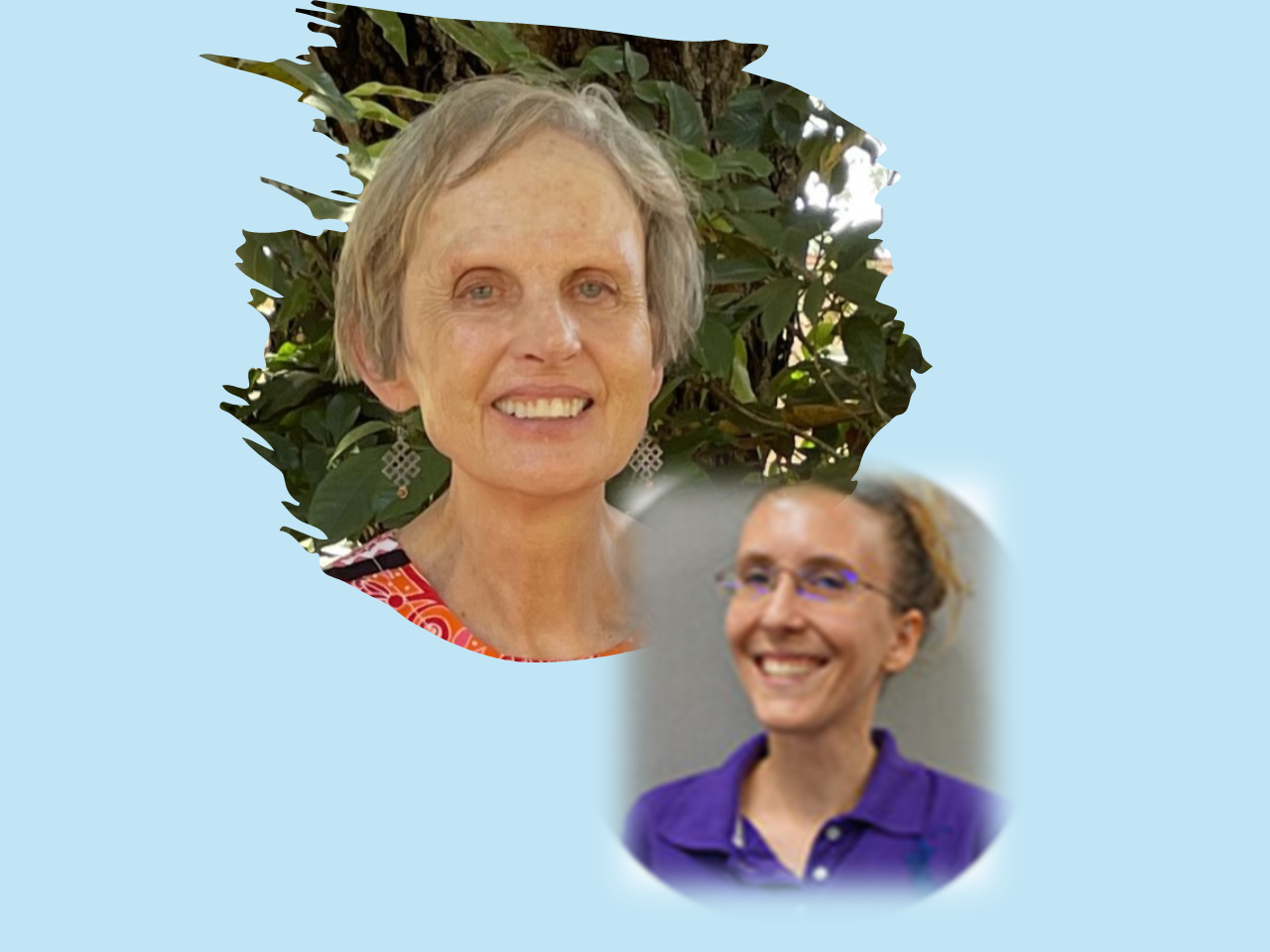
joanne blaney: “Training in Restorative Justice Circles IV (Dialogue, Peacekeeping & Conflict)”
Led by Joanne Blaney and Karen Bortvetd from MKLM, Restorative Justice practices align with core principles of nonviolence, respect for human dignity, empathy, community, healing and restoration. The course participants will develop skills in the use of restorative circles of dialogue, peace-building and conflict. This training is experiential, and together we can discover the transformative power of circles to strengthen relationships, build community and repair harm. The circle creates a space for folks to learn from each other, heal traumas and bring about transformation.
In a world of violence and polarization, we will practice ways to welcome diverse views, prevent and intervene in conflicts, and to build peace in our families, communities and neighborhoods.
The training will include:
· Origins and philosophy of restorative justice
· Nonviolence and direct/structural violence
· Conflict development and transformation
· Restorative values
· What is truth?
· Practice in Restorative Justice circles:
1. Dialogue Circle
2. Peace-Building Circle
3. Conflict Circle
· Art of asking questions that lead to dialogue and engagement
· Active listening skills.
· Practice in Nonviolent Communication
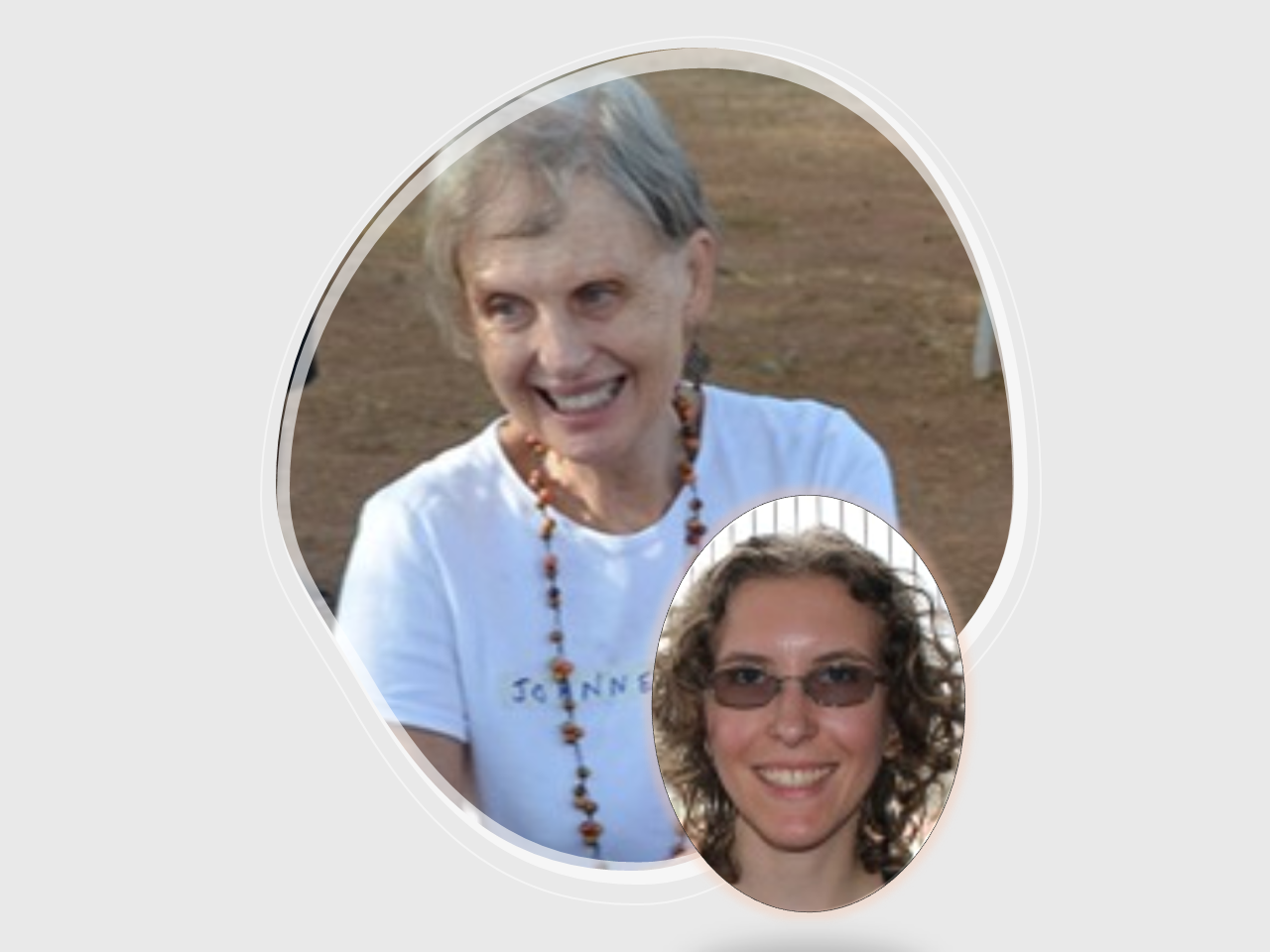
joanne blaney: “Training in Restorative Justice Circles III (Dialogue, Peacekeeping & Conflict)”
Joanne Blaney is a Maryknoll Lay Missioner in Brazil and, for the last 20 years, has worked with the themes of Restorative Justice, Forgiveness and Reconciliation. Joanne is co-founder of the Restorative Justice Center at the Popular Education and Human Rights Project in São Paulo. She is committed to nonviolence, dialogue and peace-building, working with others to find pathways to heal traumas and working to transform the direct and structural violence that cause so much suffering and polarization in our world.
Joanne has an M.A. degree in Education from the University of Maryland in the U.S. and worked as a teacher and director of urban schools for many years. She is a certified facilitator and Trainer of Trainers in Restorative Justice Practices by the International Institute for Restorative Practices and the Ajuris School of the Judiciary (Ajuris) in Brazil. Joanne works as a facilitator of conflicts and, has given trainings to a variety of groups including the National Prison Ministry Pastoral, as well as worked with and learned from the people of Brazil, Uganda, Finland and Kenya. She gives courses in the community, church, prisons, social-educational projects and the judicial system.
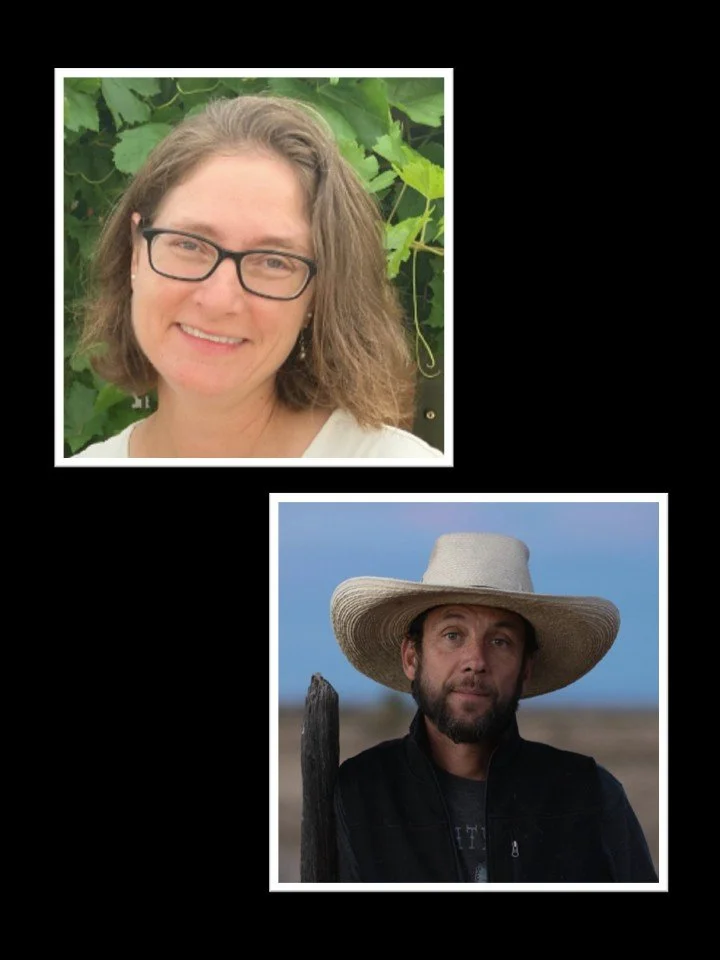
Janaé Reneaud Field: “Preserving the Chihuahuan Desert: Conservation, Challenges and Opportunities.” With guest speaker: Mike Gaglio.
Presentation Title
Preserving the Desert and Lands: Conservation Challenges and Opportunities,
Presentation overview
This presentation explores the need to protect fragile desert ecosystems and surrounding lands, highlighting both the challenges of conservation and the opportunities for collective action through private public partnerships. Participants will learn how deserts—often seen as barren—are actually rich in biodiversity, and vital resources, and how we can make a difference. The work at Keystone Heritage Park will be highlighted as a strategy to promote awareness of the importance of land conservation, water harvesting, native plants, and the interconnectedness of these strategies as part of environmental stewardship.
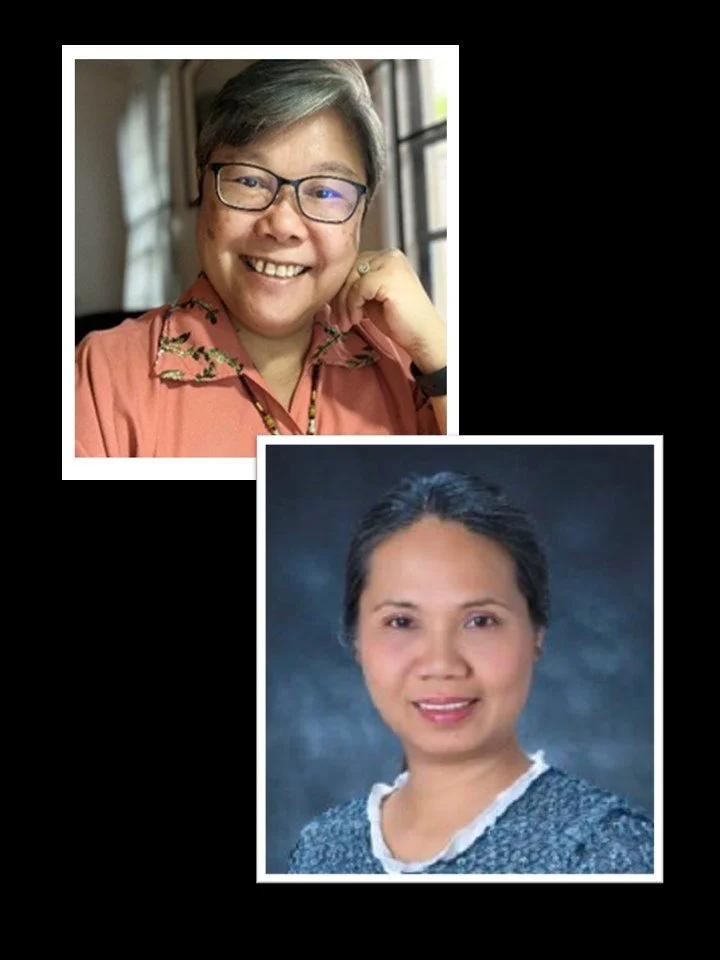
Marvie Misolas, MM & milagros s. serrana: “Confronting Climate change ~ advocacy for a planet in peril”
Green Convergence for Safe Food, Healthy Environment and Sustainable Economy A broad coalition promoting development that uplifts communities while protecting land, air, and water. Its flagship programs — Kamayan Para sa Kalikasan, State of Nature Assessment, Philippine Environment Summit, and the Ako Ang Bukas Movement — drive public awareness and action on urgent environmental issues.
ESI Reforestation Program in the Southern Sierra Madre A 261.5‑hectare project in Tanay, Rizal focused on restoring forests and biodiversity. It integrates Dumagat Remontado traditional knowledge with science‑based conservation to strengthen local stewardship of the Sierra Madre, one of the country’s most critical ecological shields.
The Philippines faces intensifying climate impacts — storms, floods, droughts — made worse by poverty and inequality, placing millions at heightened risk.
Presenting Sister M. Misolas A Maryknoll Sister who has represented her congregation at major UN climate and migration conferences. She now leads the Environmental Studies Institute at Miriam College, focusing on climate change advocacy.
Milagros S. Serrana Program Leader of Ako Ang Bukas and a long‑time educator at Miriam College. Her work centers on environmental education and public awareness, shaped by three decades of academic leadership.
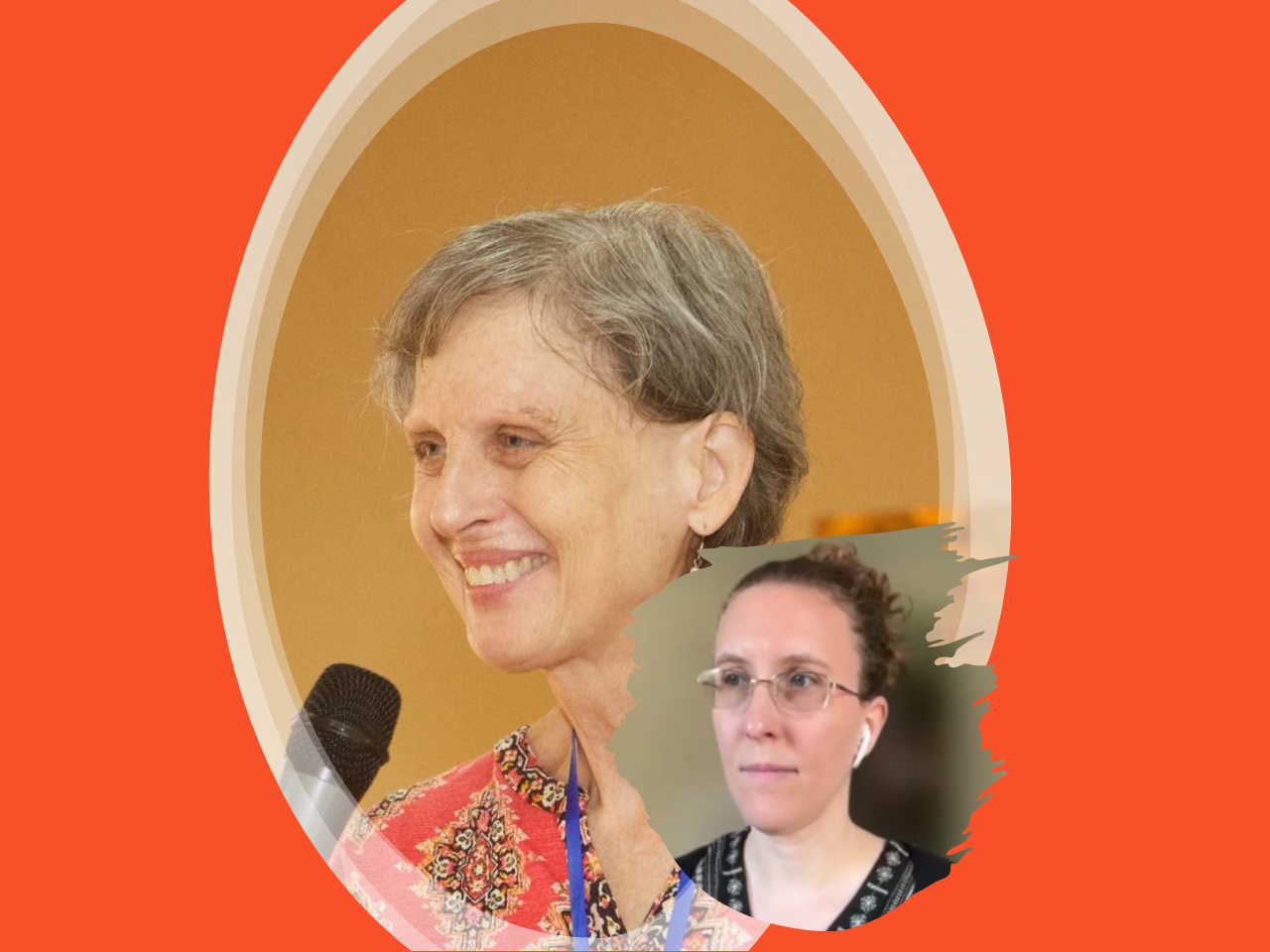
Joanne blaney: “Training in Restorative Justice Circles II (Dialogue, Peacekeeping & Conflict)”
Restorative justice practices align with core principles of nonviolence, respect for human dignity, empathy, community, healing and restoration. The course participants will develop skills in the use of restorative circles of dialogue, peace-building and conflict. This training is experiential, and together we can discover the transformative power of circles to strengthen relationships, build community and repair harm. The circle creates a space for folks to learn from each other, heal traumas and bring about transformation.
Joanne Blaney is a Maryknoll Lay Missioner in Brazil and, for the last 20 years, has worked with the themes of Restorative Justice, Forgiveness and Reconciliation. Joanne is co-founder of the Restorative Justice Center at the Popular Education and Human Rights Project in São Paulo. She is committed to nonviolence, dialogue and peace-building, working with others to find pathways to heal traumas and working to transform the direct and structural violence that cause so much suffering and polarization in our world.
Joanne has an M.A. degree in Education from the University of Maryland in the U.S. and worked as a teacher and director of urban schools for many years. She is a certified facilitator and Trainer of Trainers in Restorative Justice Practices by the International Institute for Restorative Practices and the Ajuris School of the Judiciary (Ajuris) in Brazil. Joanne works as a facilitator of conflicts and, has given trainings to a variety of groups including the National Prison Ministry Pastoral, as well as worked with and learned from the people of Brazil, Uganda, Finland and Kenya. She gives courses in the community, church, prisons, social-educational projects and the judicial
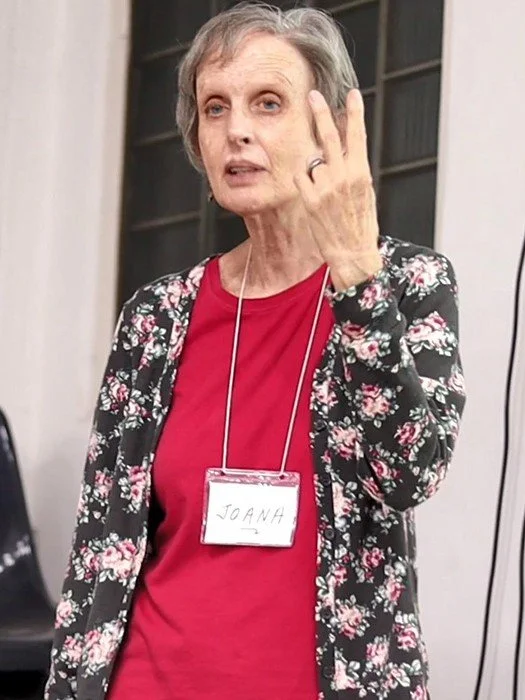
Joanne Blaney: “Training in Restorative Justice Circles i (Dialogue, Peacekeeping & Conflict)”
Restorative justice practices align with core principles of nonviolence, respect for human dignity, empathy, community, healing and restoration. The course participants will develop skills in the use of restorative circles of dialogue, peace-building and conflict. This training is experiential, and together we can discover the transformative power of circles to strengthen relationships, build community and repair harm. The circle creates a space for folks to learn from each other, heal traumas and bring about transformation.
Joanne Blaney is a Maryknoll Lay Missioner in Brazil and, for the last 20 years, has worked with the themes of Restorative Justice, Forgiveness and Reconciliation. Joanne is co-founder of the Restorative Justice Center at the Popular Education and Human Rights Project in São Paulo. She is committed to nonviolence, dialogue and peace-building, working with others to find pathways to heal traumas and working to transform the direct and structural violence that cause so much suffering and polarization in our world.
Joanne has an M.A. degree in Education from the University of Maryland in the U.S. and worked as a teacher and director of urban schools for many years. She is a certified facilitator and Trainer of Trainers in Restorative Justice Practices by the International Institute for Restorative Practices and the Ajuris School of the Judiciary (Ajuris) in Brazil. Joanne works as a facilitator of conflicts and, has given trainings to a variety of groups including the National Prison Ministry Pastoral, as well as worked with and learned from the people of Brazil, Uganda, Finland and Kenya. She gives courses in the community, church, prisons, social-educational projects and the judicial system.
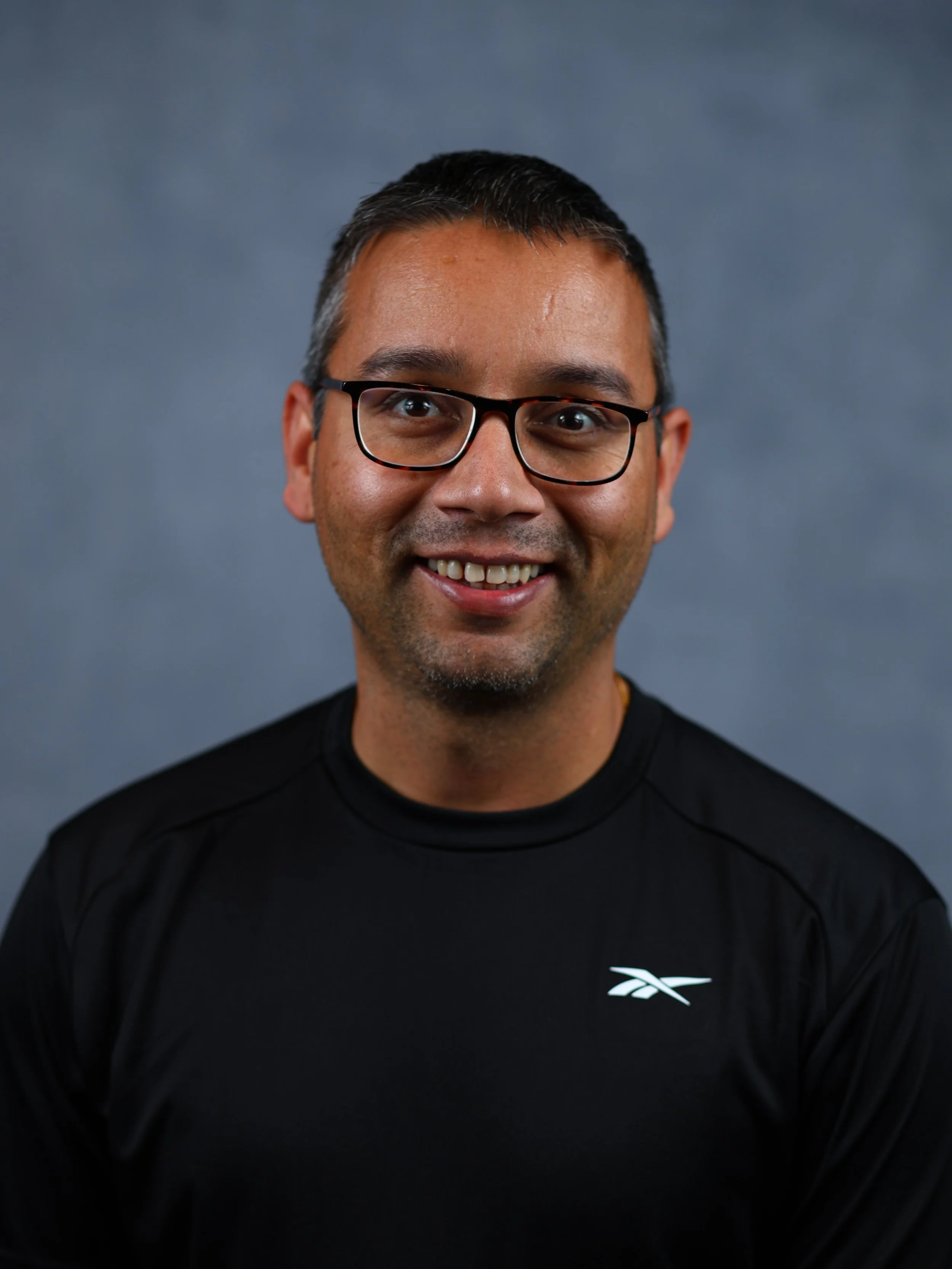
Dr. Saroj dhital: “The Work of GreeNing the Chihuahuan Desert”
The northern Chihuahuan Desert has undergone rapid landscape change, including loss of native vegetation, woody plant encroachment, expansion of agriculture, and new dust sources. These changes resulted in increased dust activities and accelerated land degradation. Recently, the region has witnessed frequent severe dust storms, affecting regional air quality, human health, dryland ecosystems, and socio-economic conditions of the people living in the US-Mexico borderlands. In Spring (March-May) 2025, an unusually large number of dust events formed in the northern Chihuahuan Desert, with a frequency of dust storms in El Paso, Texas, not experienced since the 1930s Dust Bowl. This talk will address how to understand the drivers of recent frequent dust events across the Chihuahuan Desert by factors such as regional agricultural expansion and perennial cover combined with the strong winds of Spring 2025 resulted in frequent severe dust events. A call to cross-border coordination is needed urgently to mitigate future dust events, associated hazards over downwind communities, and to make sustainable drylands.
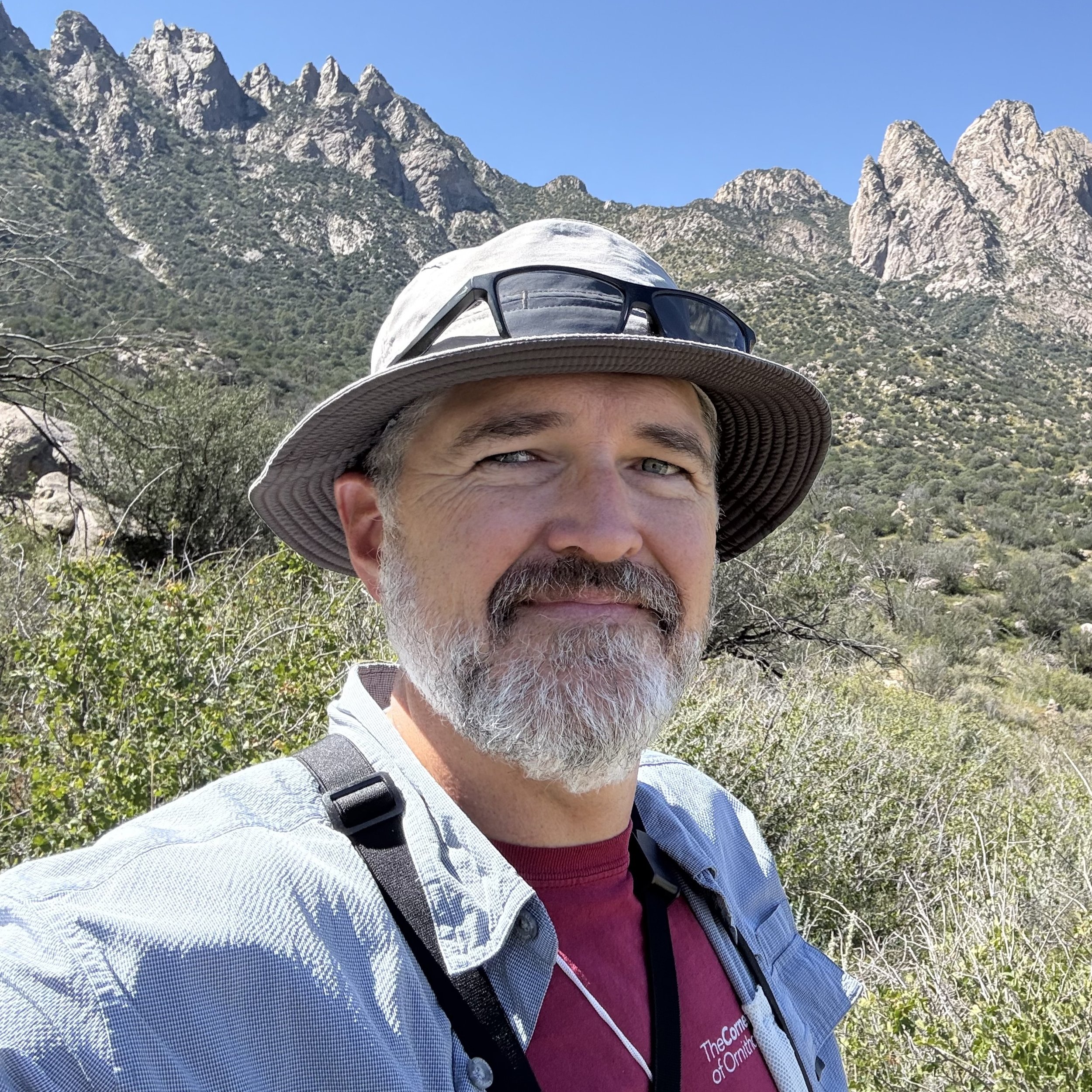
Dr. Saroj Dhital is a Research Scientist, at New Mexico State University. He does research on land cover change, dust emissions and transport processes, and their impacts. He holds a PhD, Atmospheric Science, University of Nevada, Reno
Dr. Kevin Floyd:“Life in the Chihuahuan Desert: Exploring its Unique Flora and Fauna”
Rich with life, the Chihuahuan Desert supports thousands of plant species and an astonishing variety of animals, many found nowhere else. By choosing native plants in our landscapes, we help protect this remarkable web of life while creating beautiful, water-wise gardens that support wildlife facing climate and development pressures.
Isaac Villegas: “Migrant God: A Christian Vision for Immigrant Justice” with guest speakers: Celine and don woznica
Isaac's talk will center on immigrant justice activism as Christians put hope into action, bearing witness to the work of solidarity among people with and without US citizenship. Isaac’s biblical, theological, and political reflections will prod our imagination as we consider a holistic vision for life in solidarity with migrants.
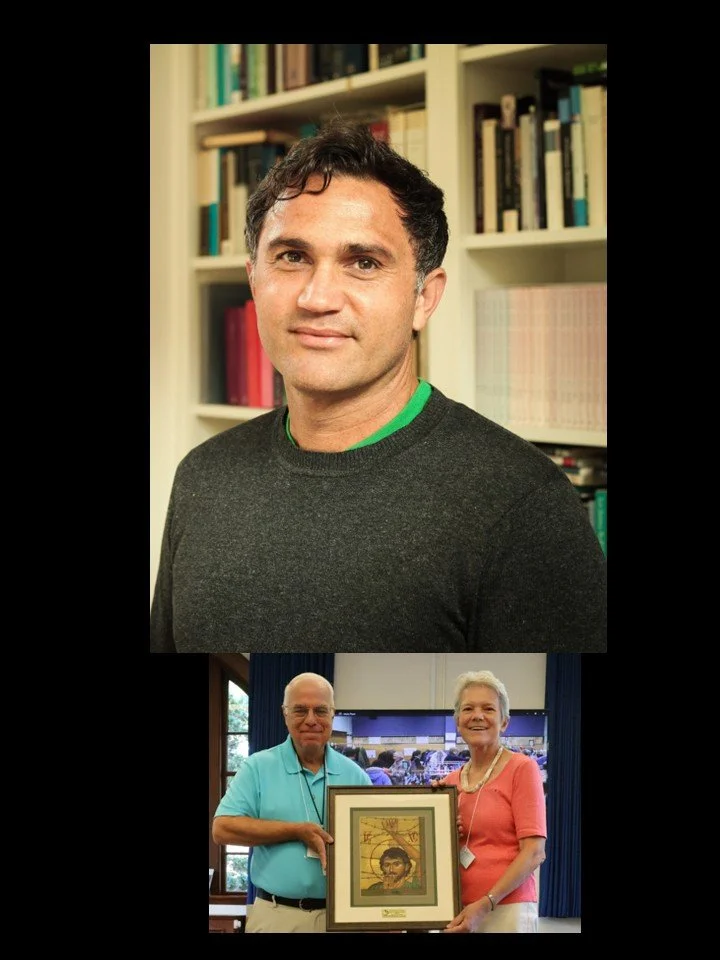
Isaac Villegas is an ordained minister in the Mennonite Church USA who is involved in the work of community organizing and activism for immigrant justice. He grew up in the borderlands of the U.S. southwest as a child of Latin American immigrants and lives in Durham, North Carolina.
Dr. David Dorado Romo: “Revolution and Racism across Historical Narratives of Migration: Non-Violent Solutions Now”
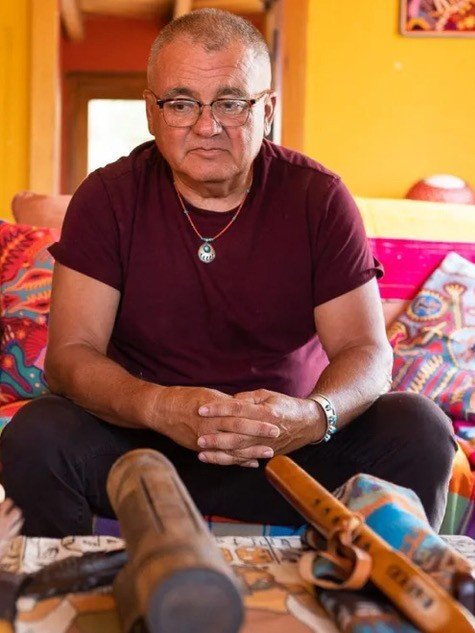
Dr. David Dorado Romo is a historian, author, translator, musician, and lifelong fronterizo whose work has profoundly reshaped how we understand the U.S.–Mexico border. Born and raised in El Paso/Juárez, he has dedicated his career to telling the stories of the borderlands with honesty, depth, and corazón. His landmark book Ringside Seat to a Revolution: An Underground Cultural History of El Paso and Juárez, 1893–1923 uncovered hidden narratives of resistance, migration, and cultural exchange, earning praise from Howard Zinn as “people’s history at its best.” Nearly two decades later, Romo brought his passion for accessible storytelling to younger generations with Borderlands and the Mexican American Story, a book that reframes U.S. history through Indigenous and Mexican American voices while encouraging readers to think critically about the past.
Beyond his scholarship, Dr. Romo is deeply engaged in community activism. He has worked to protect historic neighborhoods like Duranguito and Segundo Barrio from erasure, insisting that preserving cultural memory is inseparable from preserving physical space. His essays and public history projects continue to challenge stereotypes and reveal uncomfortable truths, such as the history of border sanitation practices that influenced Nazi Germany’s racial policies, while affirming the dignity and resilience of border communities.
Dr. Romo often reminds us that remembering is an act of healing: “If we want to heal from these wounds, we first have to learn the truth.” His life’s work embodies this conviction. By illuminating silenced histories and celebrating the richness of border culture, he offers the world a vision of the frontera not as a line of division, but as a place of encuentro, creativity, and hope.
Dr. Nancy Pineda Madrid: “Theology at the Border: Faith, Feminicide and the Call to Justice”
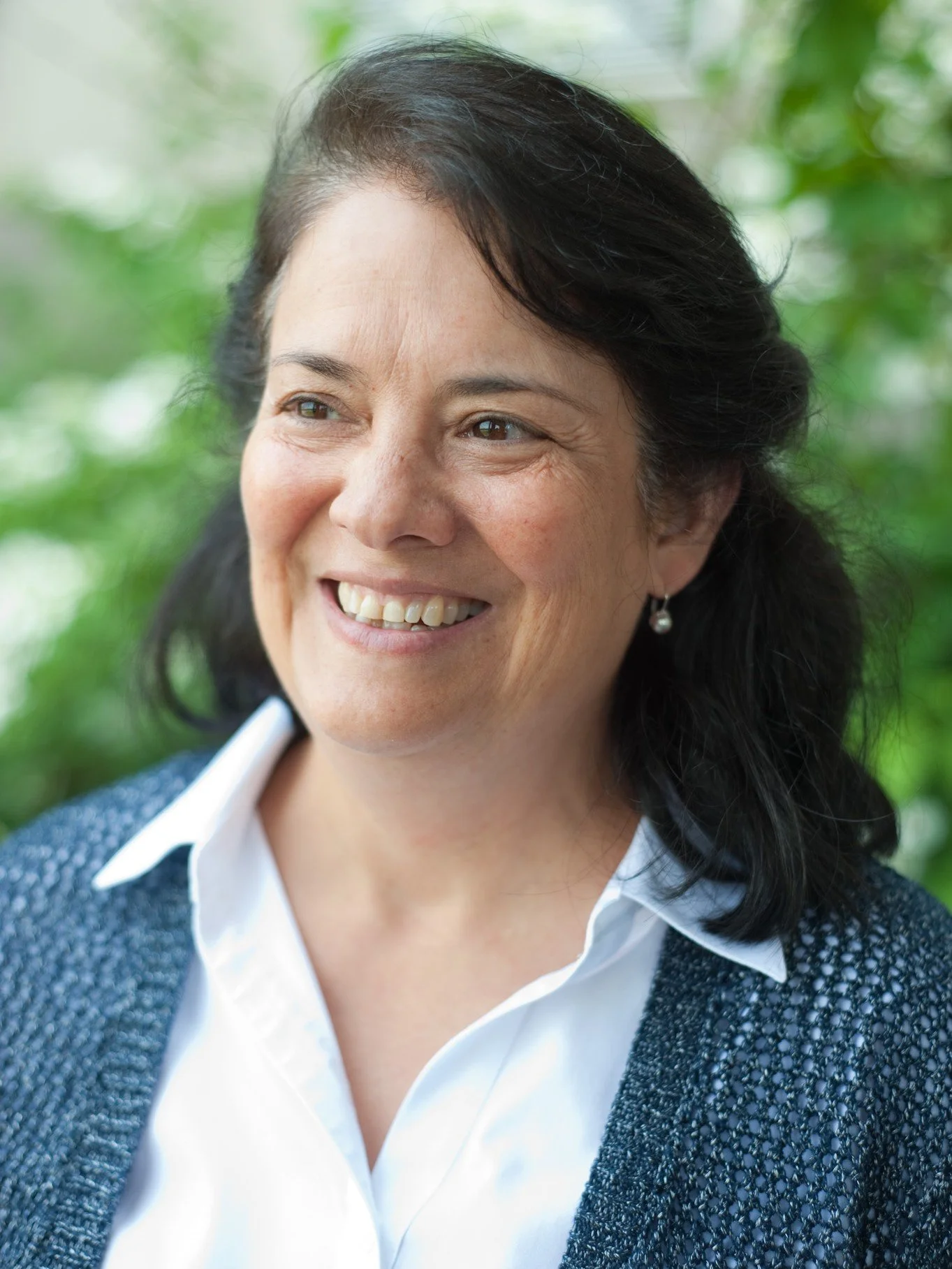
Violence destroys lives. One of the dangers violence poses to the survivors is violence’s capacity to destroy their awareness of women as imago Dei by inhibiting imagination and truncating their human openness to the mystical-political dimension of being human beings. This presentation takes the escalation of violence against brown women, particularly feminicide, to be a tragic untenable reality in our time. In this presentation, I discuss that while violence inflicts severe wounds, nonetheless, resistance to violence in the form of public reinterpretations of Christian symbols and narratives can foster and encourage the development of a mystical-political dimension of life.
-
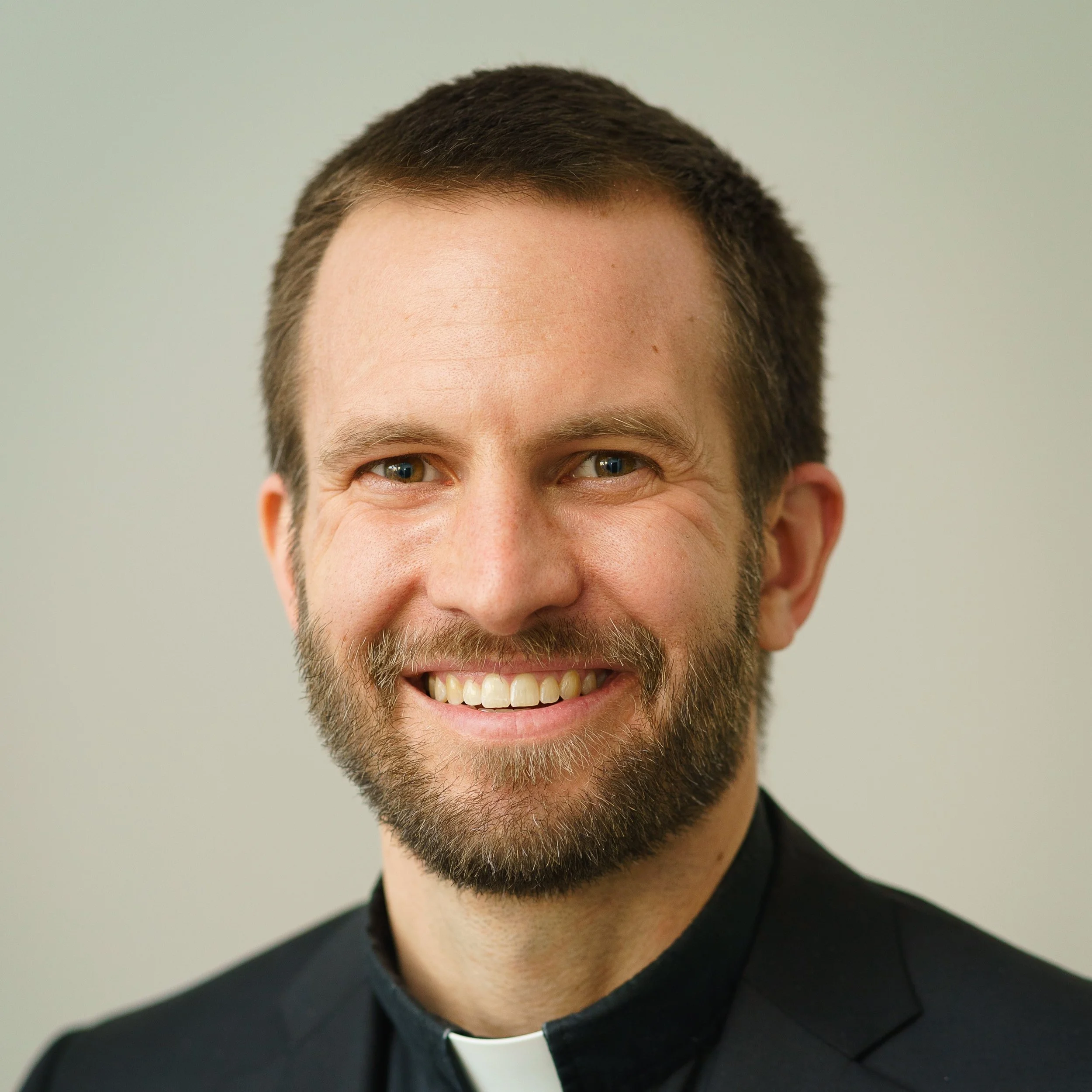
Ignatian Accompaniment of Migrants through Kidnappings and Criminalization
Fr. Brian Strassburger, SJ, Director of Del Camino Jesuit Border Ministries, shared powerful stories from the front lines of his ministry. Grounded in Ignatian spirituality and Catholic social teaching, he talked about violence, families torn apart, and individuals scarred by the trauma of kidnapping. Vivid stories of those he accompanies highlighted how current policies—such as the profiling and criminalization of migrants based on their tattoos—inflict deep wounds on the Body of Christ. His talk was a strong calling to action: visiting shelters, volunteer, witness immigration court, support migrants and advocate were some of his suggestions to get involved.
Wednesday, November 12, 2025 3:00 - 4:30 PM MT
-
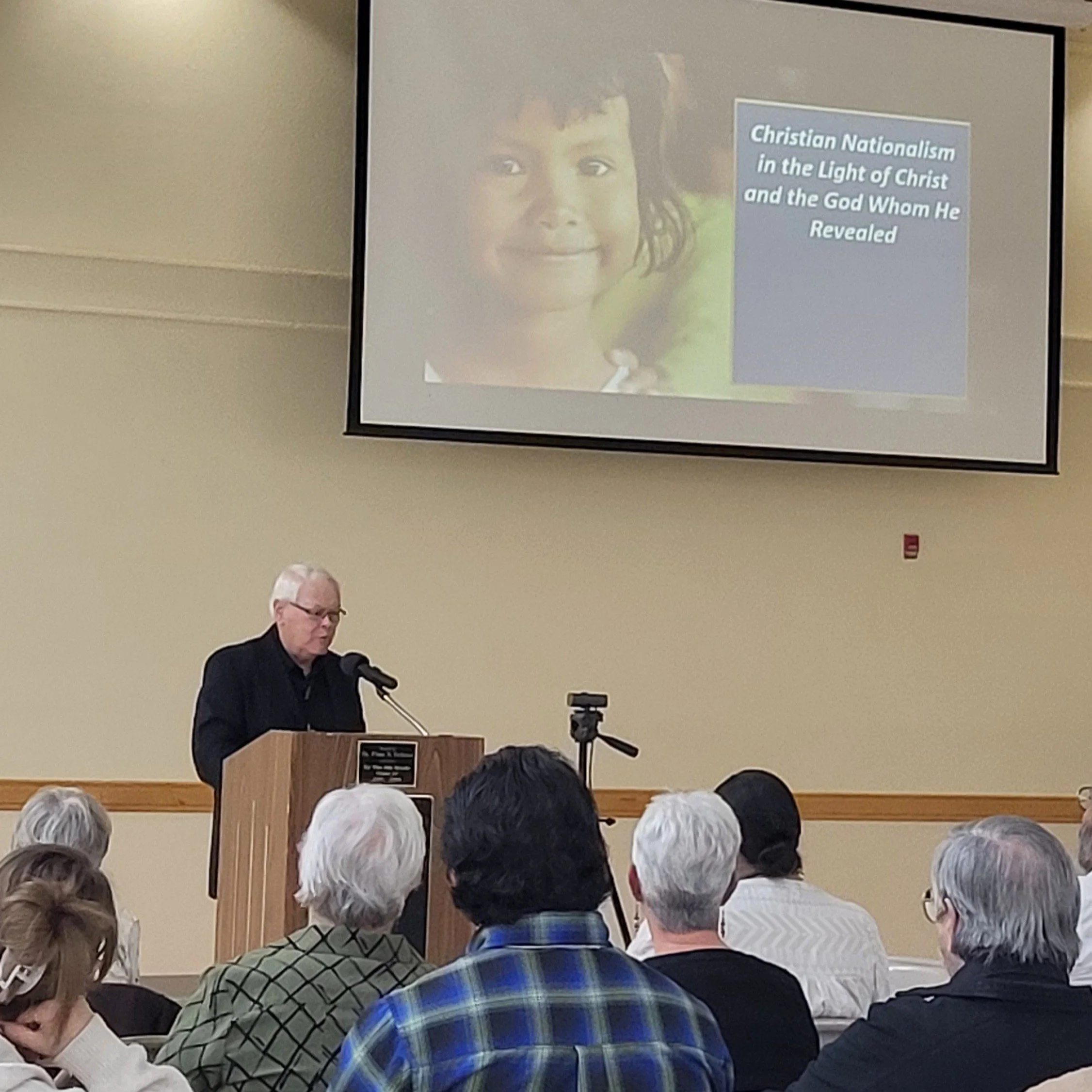
Christian Nationalism in the Light of Christ and the God Whom He Revealed
Describing Christian Nationalism and what he called the Commandments for the Long Haul, Fr. Ron Rolheiser guided the audience in an engaging conversation about the challenges and struggles for reconciliation, healing, and peace in our current circumstances and called participants to renewed faith and integrity.
Thurs. Nov 6, 2025–7 pm - 8:30 pm
-

Restorative Justice Skills Training for Beginners
Guided by the dynamic co-facilitation of Akansha Marwah and Sal Corbin, this session introduced participants to the foundational theories of Restorative Justice (RJ) and provided hands-on opportunities to engage with its core practices. Through a rich multimedia presentation, thoughtful dialogue, and meaningful reflection, attendees began to explore how RJ takes shape across various contexts. A highlight of the experience was the chance to participate in a restorative circle modeled after the approach used by the DC Peace Team in the greater Washington, DC area. This immersive practice allowed participants to see, hear, and feel Restorative Justice in action—offering a powerful glimpse into its transformative potential.
Tue. Oct 28, 2025 - 9 am to noon MT
-
Nonviolent Communication skills training
This foundational training introduced participants to the core principles of Nonviolent Communication (NVC). The session focused on essential skill-building and cultivating a deeper understanding of compassionate dialogue. Starting with a grounding and centering exercise, interactive segments followed, guiding participants through key distinctions—such as feelings vs. thoughts, requests vs. demands—and the foundational idea that most behaviors are strategies to meet underlying human needs.
NVC is widely used by professionals across diverse fields—including healthcare, education, activism, diplomacy, and social work—to foster empathy, resolve tension, and improve collaboration in both personal and professional settings.
Tue.Oct 21, 2025 - 9:00 am -noon MT
-

Migrant Accompaniment in an Era of Mass Deportation
This event featuring Ruben Garcia, founder and director of Annunciation House in El Paso, explored how in a moment when migrants and refugees are experiencing untold hardships, we may misdirect our focus and attention. It is not solely a question of what is being done to migrants and refugees, it is also a question of what is happening to us individually, as a people and a nation.
Mon. Sept 29, 2025 5:00 - 6:30 PM MT
-
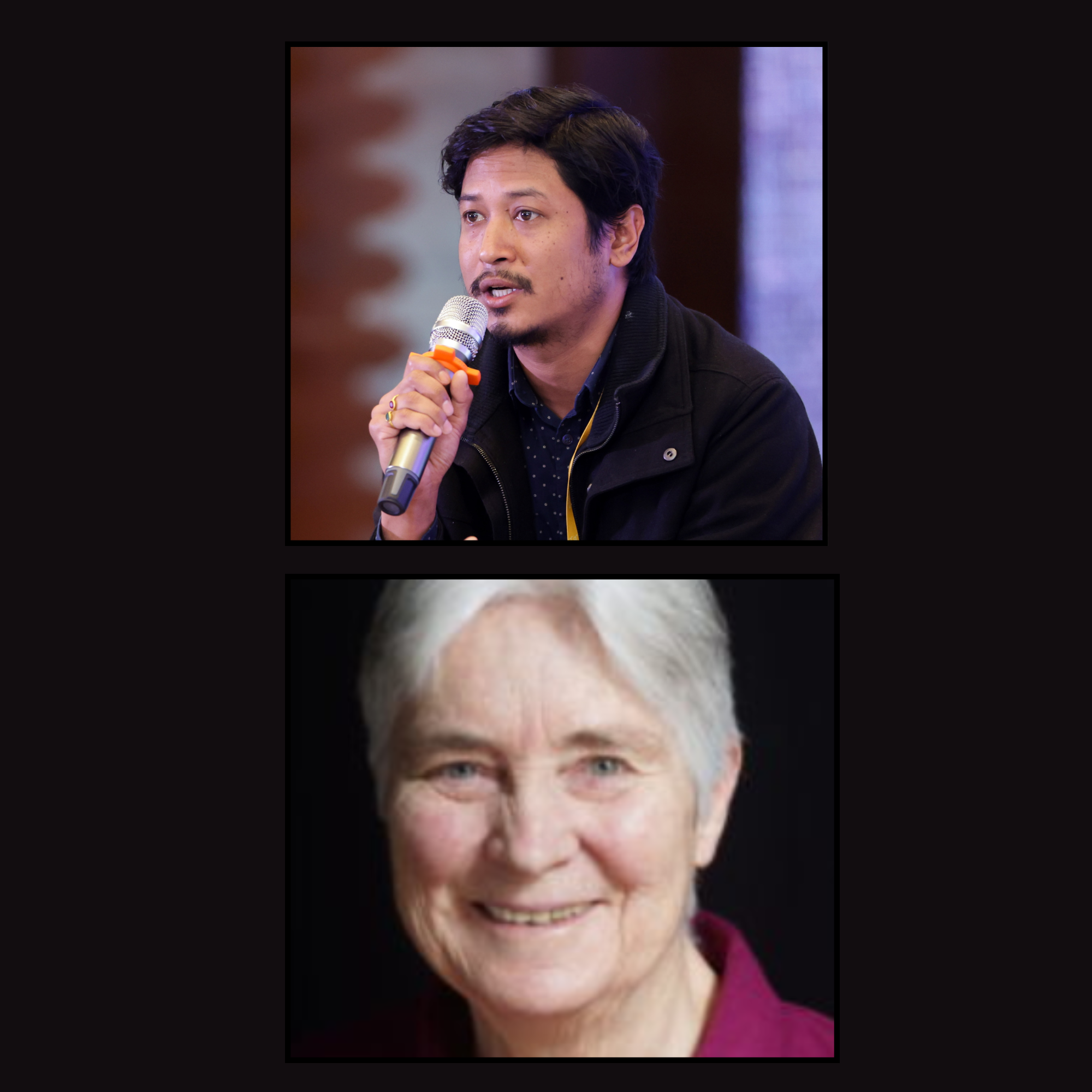
Protecting the Earth from industries of Extraction and Energy: A Perspective from Asian and Aymara Indigenous Communities
This is a webinar - presentation and Q&A - with Prabindra Shakya and Sr. Patricia Ryan,MM. Prabindra is a human rights activist belonging to the indigenous Newar community of Nepal. Sr. Patricia is a renowned human rights and environmental advocate who has spent decades working with the Indigenous Aymara people in Peru.
Wed. July 30, 2025 9:00 - 10:30 AM MT
-
The Guardians of Creation: Indigenous Spiritual Paths to Environmental Stewardship
Sr. Dr. Weiler presents the main dimensions of the cosmovision of the indigenous peoples in the Amazon region, their specific understanding of the place as human beings in the cosmos and the relationships of connectedness between all living beings. While doing this, she explores what the indigenous cosmovision communicates to all of us.
Wed. July 23, 2025 5:00 - 6:30 PM MT
-
One Earth, One Spirit: A Call to Action
Our religious traditions, spiritualities, science and ancestral wisdom converge in this poly-crises moment affirming that we are one in a very sacred universe. We are inspired by deeper understanding to work in prophetic ways as we learn to be engaged mystics. This webinar explores these intersections and what they look like on the ground through work on climate justice, extractivism and advocacy with local communities in New Mexico.
Wed. July 16, 2025 5:00-6:30 PM MT
-
Exploring Different Approaches to Peace-Building and Nonviolence: Grassroots Lessons from Kenya
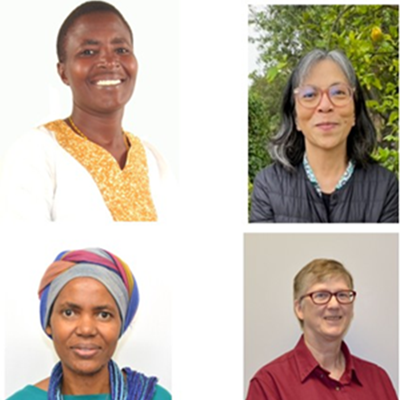
What is the history of violence in Kenya? How did Elizabeth Kanini Kimau and the Sisters intervene in their local contexts? What were the challenges they faced and how did they overcome them? What skills did they develop and how do they teach others? What lessons can others interested in peace-building and nonviolence learn from their work?
Th June 26 2025 10:00-11:30 am MT
-
Start Where You Are: Practices for Everyday Peace and Nonviolence
A 90-minute webinar exploring what it means to cultivate peace and nonviolence within ourselves and right where we are, amidst the complexity and messiness of our current context and everyday lives. How do we cultivate peace not only in the world, but in our own hearts, homes, and relationships?
Th. June 12, 2025 5:00-6:30 PM MT
-
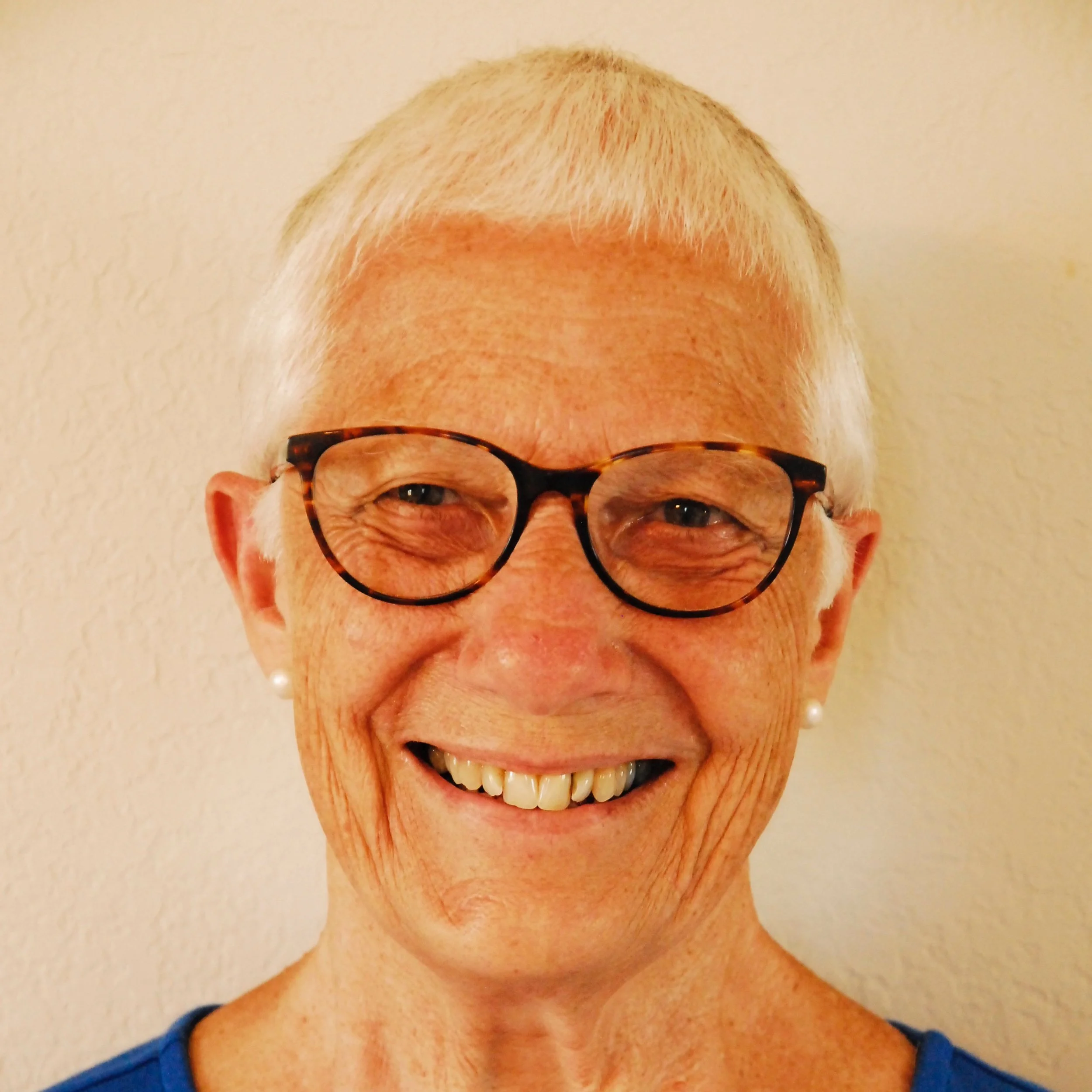
Nonviolent Christianity for Increasingly Violent Times: Theology and Practice for Forming Nonviolent Individuals and Communities
In a time of increasing polarization and violent rhetoric in our national politics, what are the practical and theological resources within Christianity to resist violence at both a personal and political level? What is a nonviolent worldview in the Christian tradition? How is it distinct from other Christianities and other streams of nonviolence?
Wed. June 4, 2025 5:00-6:30 pm MT
-
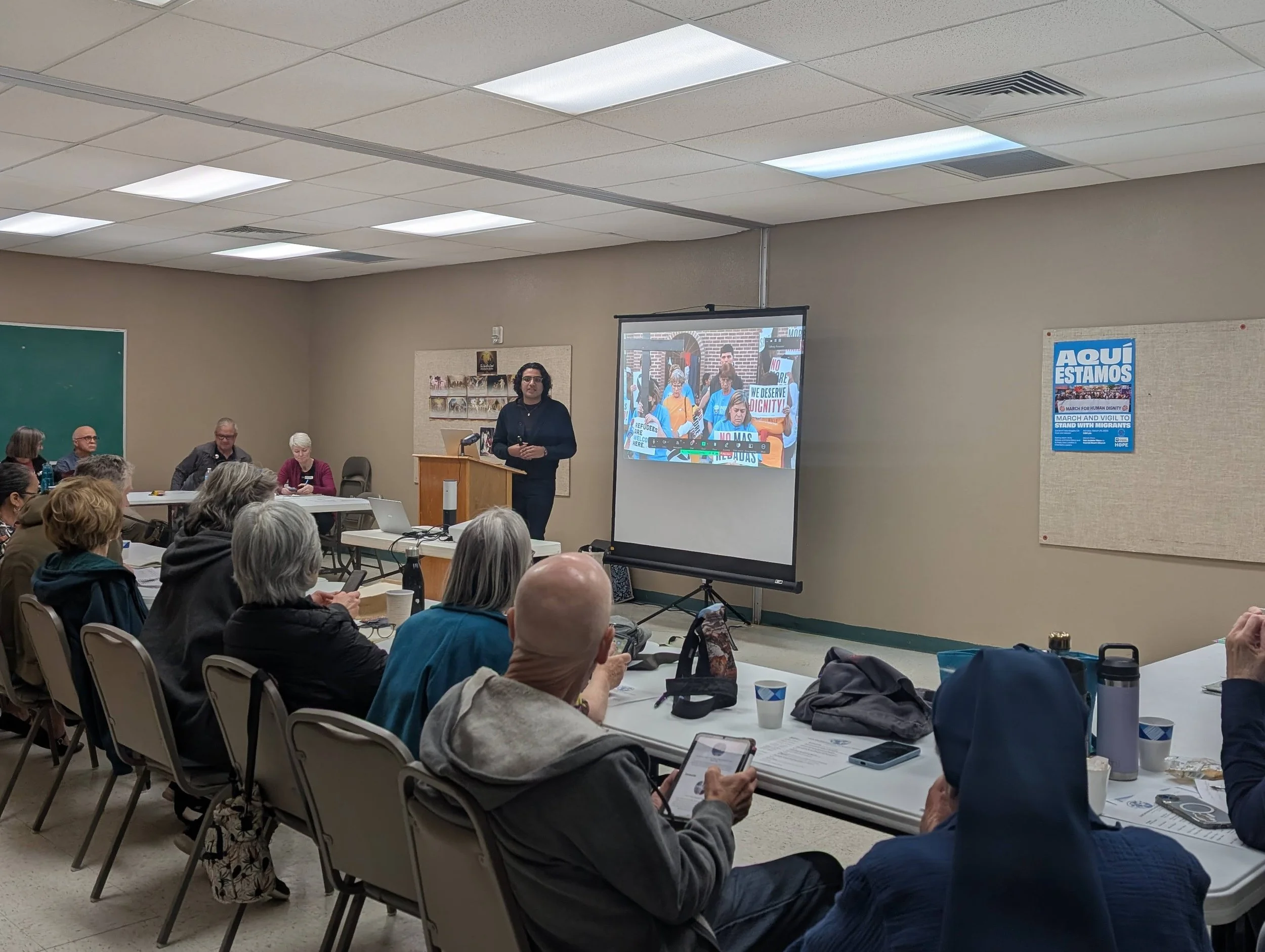
Hope and Resilience on the Border
The inaugural Maryknoll Monarch Initiative activity, held on March 18, 2025, was a hybrid event that brought together local and regional leaders from non-governmental organizations to discuss immigration from multiple perspectives. The program began with A National Overview of Migration by Maryknoll Office of Global Concerns and continued through sessions such as Listening to the Voices of Immigrants (JRSUSA), The History of the Border, Migration, and Human Rights (BHNR), Migrant Advocacy in 2025, and Human Trafficking (Las Americas- Maryknoll Lay Missioners). It concluded with a discussion on The Impact of Administration Policies on Migrants (HBI).
Tue. March 18 9 am to 4 pm MT